

Table of Contents
- What Makes a Great Espresso Bean?
- Espresso Roast vs Medium Roast: Which Should You Choose?
- The Best Coffee Beans for Home Espresso: Our Top Picks
- Best Grind Size for Espresso (And How to Dial It In)
- How to Store Espresso Beans for Freshness
- Decaf and Low-Caffeine Espresso Bean Options
- Subscription vs. One-Time Purchase: Which Saves More?
- Which Espresso Beans Should You Buy?
Last Updated: August 23, 2026
Finding the best coffee beans for home espresso is harder than it looks. The specialty coffee market has exploded with options ranging from Italian-style blends to single-origin naturals that require serious dialing in. At The Brew Collective, we've tasted through dozens of options to help you cut through the noise and pull better shots at home.
This guide covers seven real picks across different roast levels, flavor profiles, and price points, plus technical details most lists skip: grind calibration, water chemistry, freshness windows, and whether a subscription actually saves you money.
Quick Picks:
- Best Overall: The Brew Collective Espresso Roast, freshly roasted, multiple grind options, direct-to-door convenience
- Best for Milk Drinks: Onyx Coffee Lab Monarch Espresso, dark chocolate and berry notes that shine in lattes
- Best Budget-Friendly: Lavazza Super Crema, thick crema, forgiving extraction, widely available
- Best for Adventurous Palates: Stumptown Hair Bender, complex citrus and dark chocolate, versatile across brew methods
What Makes a Great Espresso Bean?
A great espresso bean produces a balanced, well-extracted shot with thick crema, satisfying body, and clean aftertaste. Espresso is unforgiving, high pressure and short contact time amplify every characteristic of the bean, so flaws in roast quality or freshness show up immediately.
A few things matter most:
- Roast level: Controls oil content, solubility, and flavor direction
- Freshness: Beans off-gassing CO2 produce better crema and more stable extraction
- Processing method: Washed, natural, and honey-process coffees extract differently
- Blend vs. single origin: Each has distinct advantages depending on your goals
Single Origin vs. Espresso Blends
Espresso blends are designed for consistency and balance. Roasters combine beans from different origins to smooth out seasonal variation and create predictable flavor profiles built around chocolate, caramel, and nutty notes. For most home baristas, blends are the smarter starting point.
Single origin espresso demands tighter extraction parameters. A washed Ethiopian might deliver stunning floral clarity and bright acidity, but grind too coarse and it tastes sour; too fine and it turns bitter fast. Start with a well-designed blend, then move to single origins once you've dialed in your machine.
Processing Method, Altitude, and Bean Density
Processing method shapes how a bean behaves under pressure. Washed-process coffees produce cleaner, brighter shots with pronounced acidity. Natural-process beans bring more sweetness, body, and fruit complexity but are less forgiving to extract evenly. Honey-process falls between the two.
Altitude affects bean density. High-altitude beans are denser and require a finer grind and longer extraction time. Lower-altitude beans are softer and extract faster. This matters when dialing in a new bag.
Espresso Roast vs Medium Roast: Which Should You Choose?
Dark roasts are more soluble, extract faster, and forgive minor grind inconsistencies. They produce rich crema, lower acidity, and bold chocolate or smoky notes. For milk-based drinks, dark roasts hold up beautifully against steamed milk.
Medium roasts preserve more origin characteristics: brighter acidity, complex tasting notes, and lighter body. They're increasingly popular in specialty coffee but demand more precision. A medium roast pulled off-target tastes sour or thin.
If you're still dialing in your machine or your grinder isn't top-tier, lean toward a medium-dark or dark roast. If you've got extraction dialed and want more flavor clarity, try a medium.
According to the Specialty Coffee Association's brewing resources, espresso extraction targets roughly 1:2 (dose to yield) in 25-30 seconds, though ideal parameters shift depending on roast level and bean density.
The Best Coffee Beans for Home Espresso: Our Top Picks
Seven picks, tested across different machines, grind settings, and brewing styles.
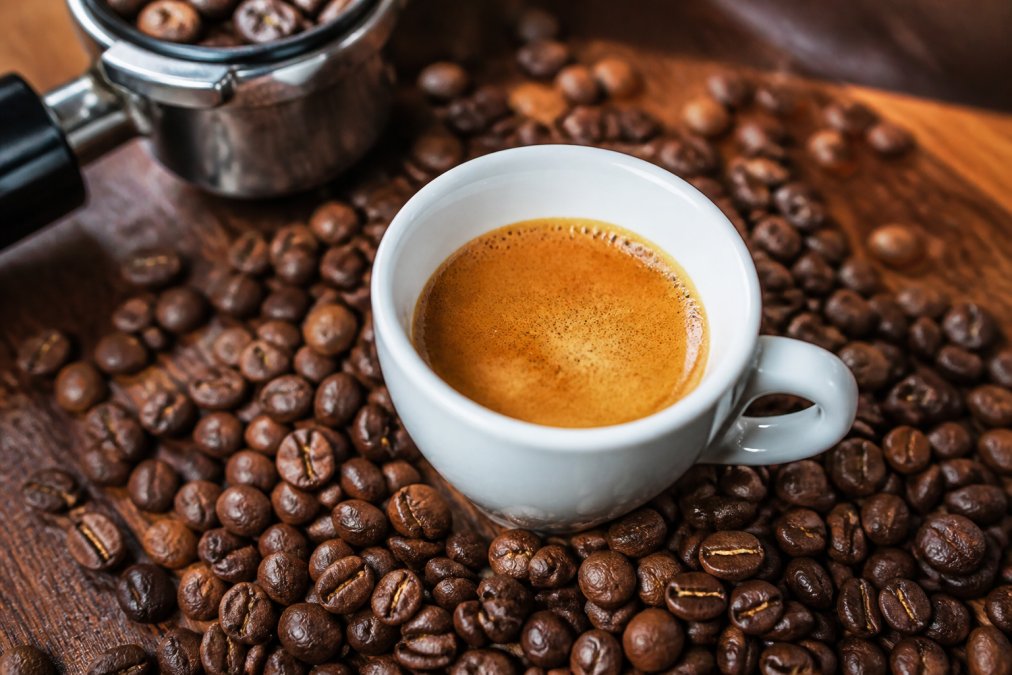
1. The Brew Collective Espresso Roast, Best Overall
The Brew Collective Espresso Roast earns the top spot because beans arrive roasted-to-order, ensuring freshness. You can order whole bean or select an espresso grind if you don't own a burr grinder yet. Sizes run from 12oz to 5LB bags.
The flavor profile delivers chocolate and caramel notes with smooth, full body and clean aftertaste. It pulls well as a straight shot and holds its own in milk drinks.
Best for: Home baristas who want freshly roasted beans delivered without specialty-shop prices.
Pros:
- Freshly roasted, shipped direct
- Multiple grind options
- Available in 12oz to 5LB sizes
- Cost-effective pricing
2. Intelligentsia Black Cat Classic Espresso, Best for Balanced Sweetness
Intelligentsia's Black Cat is a respected espresso blend of Brazilian and Colombian coffees producing a light roast profile with sweet acidity, chocolate notes, and silky body. It's excellent as a straight shot or short cortado.
Best for: Espresso lovers who prefer sweetness and balance over bold intensity.
Pros: Supreme balance, consistently sweet and chocolatey, iconic blend with long track record.
3. Lavazza Super Crema Espresso, Best Budget-Friendly Option
Lavazza Super Crema is a medium roast blend of Arabica and Robusta beans producing thick, compact crema and balanced flavor around roasted hazelnut and brown sugar. The Robusta content adds crema thickness, body, and caffeine punch. For milk-based drinks, it's hard to beat at its price point.
Best for: Traditional Italian espresso experience, especially lattes and cappuccinos.
Pros: Strong flavor without bitterness, excellent crema, widely available.
4. Stumptown Hair Bender Espresso, Best for Versatility
Stumptown's Hair Bender works equally well as espresso, pour-over, drip, or French press. The blend delivers tasting notes of citrus, dark chocolate, and raisin with complexity that rewards attention.
Best for: Coffee enthusiasts who want one versatile bag performing across multiple brew methods.
Pros: Rich, complex, and consistently excellent.
5. Onyx Coffee Lab Monarch Espresso, Best for Milk Drinks
Onyx's Monarch is engineered for milk-based drinks. The medium-dark roast blend delivers dark chocolate, molasses, red wine, and dried berries that bind beautifully with dairy and plant-based milks.
Best for: Home baristas who primarily drink lattes, cappuccinos, or flat whites.
Pros: Full and velvety body, precision roasting, creates exceptional milk drinks.
6. Peet's Espresso Forte, Best Dark Roast
Peet's Espresso Forte is a dark roast blend for people wanting bold, traditional espresso with serious body and crema. The Indo-Pacific and Americas blend produces chocolate truffle, lemon curd, and hazelnut notes with stout body. It extracts easily and forgives minor grind inconsistencies.
Best for: Espresso lovers wanting bold, rich, traditional dark roast.
Pros: Bold flavor, excellent crema, widely available.
7. Counter Culture Coffee Big Trouble, Best for Beginners
Counter Culture's Big Trouble is the most forgiving espresso on this list. The medium-dark roast delivers low acidity with caramel, chocolate, and nutty flavors, designed to be approachable across brew methods and extraction variables. It's Direct Trade and B Corp certified.
Best for: Home baristas wanting consistently delicious, forgiving espresso with classic flavors.
Pros: Deliciously sweet and clean, versatile, commitment to sustainability.
| Bean | Roast Level | Best For | Key Flavor Notes |
|---|---|---|---|
| The Brew Collective Espresso Roast | Medium-Dark | Overall best, freshness-focused | Chocolate, caramel, smooth body |
| Intelligentsia Black Cat | Light | Balanced sweetness, straight shots | Sweet acidity, chocolate, silky |
| Lavazza Super Crema | Medium | Budget pick, milk drinks | Hazelnut, brown sugar, thick crema |
| Stumptown Hair Bender | Medium-Dark | Versatile multi-method brewing | Citrus, dark chocolate, raisin |
| Onyx Monarch | Medium-Dark | Lattes and cappuccinos | Dark chocolate, molasses, dried berries |
| Peet's Espresso Forte | Dark | Bold traditional espresso | Chocolate truffle, hazelnut, lemon curd |
| Counter Culture Big Trouble | Medium-Dark | Beginners, forgiving extraction | Caramel, chocolate, nutty |
Best Grind Size for Espresso (And How to Dial It In)
The best grind size for espresso is finer than any other brew method, producing a powder-like consistency that offers significant resistance when tamped. The exact setting depends on your grinder, bean, and machine.
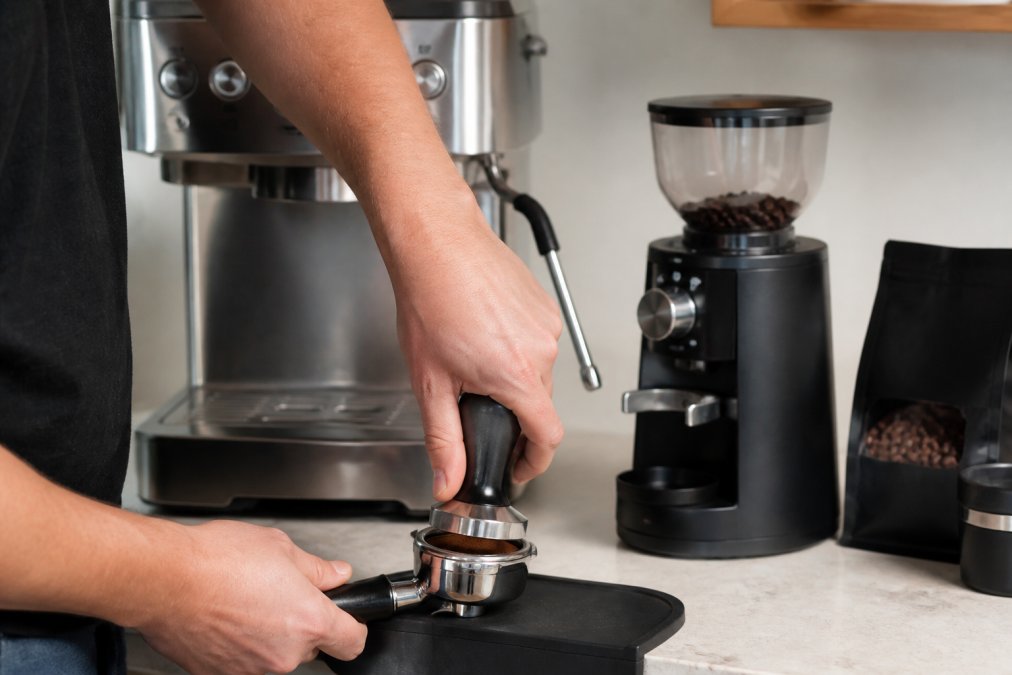
Target a 18-20g dose extracting in 25-30 seconds, yielding roughly 36-40g of liquid (sca.coffee). If your shot runs faster than 25 seconds, grind finer. If it stalls past 35 seconds, grind coarser. Adjust in small increments, one or two notches on most burr grinders shifts extraction significantly.
Adjusting Grind for Different Bean Types
Dense, high-altitude beans require a finer grind than lower-altitude beans at equivalent roast levels. Their density resists extraction, requiring more surface area contact.
Dark roasts are more brittle and grind to a finer effective particle size at the same setting as medium roasts. If you switch from medium to dark roast without adjusting, shots will run too slow and taste bitter. Coarsen your grind slightly.
Natural-process beans have more oils and produce more fines when ground, causing uneven extraction. A slightly coarser grind with longer pre-infusion helps.
As documented in the SCA's research on espresso extraction variables, grind consistency is one of the highest-impact variables in espresso quality.
How to Store Espresso Beans for Freshness
Proper storage means keeping beans in an airtight container, away from light, heat, and moisture, at room temperature. Don't refrigerate, temperature cycling and ambient moisture accelerate staling.
Beans are best used between 7 and 21 days after roast date. Before 7 days, excess CO2 from degassing creates unstable, unpredictable extraction. After 21-28 days, aromatic compounds that create crema and flavor complexity fade noticeably.
Storage checklist:
- Store in an opaque, airtight container
- Keep away from direct sunlight and heat sources
- Do not refrigerate unless storing for more than 4 weeks
- Check the roast date before buying
- Buy in quantities you'll use within 2-3 weeks
The roast date is the most important piece of information on any bag of specialty coffee.
Decaf and Low-Caffeine Espresso Bean Options
Modern decaffeination methods have improved dramatically. The Swiss Water Process removes caffeine without chemical solvents and preserves much of the original flavor profile.
What to look for in decaf espresso:
- Swiss Water Process or CO2 decaffeination for cleaner flavor
- Medium to medium-dark roast for better extraction stability
- A roast date within 2-3 weeks
- Blend rather than single origin for consistent extraction
Low-caffeine options beyond decaf include robusta-free blends (Robusta contains roughly twice the caffeine of Arabica) and lighter roasts, which contain slightly more caffeine than dark roasts because roasting reduces caffeine content marginally.
Subscription vs. One-Time Purchase: Which Saves More?
Subscriptions win on freshness. Roasters batch-roast to order and ship within days of roasting.
One-time purchases win on flexibility. You're not locked into a single bean and can experiment without commitment.
The honest math: Subscriptions often offer 10-15% discounts and free or reduced shipping. If you buy the same bean consistently every 2-3 weeks, subscriptions save money. If you buy sporadically or experiment, savings rarely justify the commitment.
A practical middle ground: use a subscription for your everyday espresso bean and buy one-time for specialty offerings you want to try.
| Factor | Subscription | One-Time Purchase |
|---|---|---|
| Freshness | High (roasted to order) | Variable (depends on retailer) |
| Cost | Usually lower per bag | Full retail price |
| Flexibility | Low (set cadence) | High (buy anytime) |
| Best for | Consistent daily drinkers | Experimenters and occasional buyers |
Which Espresso Beans Should You Buy?
The best coffee beans for home espresso depend on your machine's capability, flavor preferences, and how much precision you'll invest in dialing in.
For most home setups, prioritize freshness first, roast level second, and origin complexity third. A freshly roasted medium-dark blend from a quality roaster will outperform an exotic single-origin sitting in a warehouse for six weeks.
If you want a reliable, freshly roasted option delivered to your door, The Brew Collective's espresso roast is the straightforward answer. The range of grind options means you can order in the format your setup needs, and the cost-per-cup is a fraction of specialty cafe prices.
For adventurous home baristas, work through this list systematically: start with a forgiving medium-dark blend, dial in your parameters, then push toward lighter roasts and single origins as your technique improves.
The best shot you'll ever pull is the next one. Adjust one variable, taste it, and repeat.
Pulling consistently great espresso at home takes the right beans and a willingness to tinker with your parameters. The Brew Collective makes that process easier with freshly roasted coffee shipped direct, available in whole bean and espresso grind formats from 12oz to 5LB bags, so you're never stuck with stale coffee or the wrong grind size. For guidance on choosing your next bag or exploring the full range of specialty-grade options, visit The Brew Collective and find your next great morning ritual.
Frequently Asked Questions
Q: What are the best coffee beans for espresso at home?
A: The best espresso beans for home brewing depend on your taste preferences. For classic chocolate and nutty notes, medium-dark blends like Lavazza Super Crema or Counter Culture Big Trouble are forgiving and consistent. For brighter, fruit-forward shots, try a light-to-medium blend like Intelligentsia Black Cat. Freshness matters most: look for a roast date on the bag and aim to brew within two to four weeks of that date for peak flavor clarity and crema.
Q: Does roast level matter for espresso beans?
A: Roast level significantly affects extraction, body, and flavor. Dark roasts produce lower acidity, heavier body, and oil-rich beans that pull quickly, making them more forgiving with basic machines. Medium roasts preserve more of the bean's original character, delivering brighter acidity and complex tasting notes, but they require tighter grind and dose control. Neither is objectively better; the right choice depends on whether you drink espresso straight or in milk-based drinks like lattes and cappuccinos.
Q: What is the difference between espresso roast and regular coffee beans?
A: There is no botanical difference between espresso beans and regular coffee beans. The distinction is in the roast profile and intended brew method. Espresso roasts are typically developed longer to reduce acidity and increase solubility, which supports fast, high-pressure extraction through a portafilter. Regular or filter roasts are often lighter, optimized for longer contact times in drip or pour-over brewing. Any whole bean coffee can technically be pulled as espresso, but purpose-roasted espresso beans make dialing in much easier.
Q: How fresh should coffee beans be for espresso?
A: For espresso, freshness is more critical than for any other brew method. Beans need a degassing period of two to ten days after roasting before they extract evenly. After that window, aim to use them within two to four weeks. Always check the roast date printed on the bag, not a vague 'best by' date. Beans ordered online from a roaster that ships shortly after roasting will often arrive fresher than bags sitting on a grocery store shelf for weeks.
Q: What beans do Italians traditionally use for espresso?
A: Traditional Italian espresso blends typically combine Arabica beans for sweetness and body with a percentage of Robusta for thick crema and a caffeine boost. Brands like Lavazza and illy are the most recognized examples. Robusta adds a distinctly earthy, bold character and produces a denser, longer-lasting crema due to its higher oil content. If you prefer that classic café-style shot with a rich, foamy top, look for blends that include Robusta alongside Arabica in the ingredient list.
This article was written using GrandRanker


